
Getting to Know Blackjack: Learning the Game with Real-Life Playing

Get to Know the Basic Rules and How to Play
Understanding blackjack basics means learning about the 52-card deck. Each card has these values:
- Number cards (2-10): Have their face value
- Face cards (Jack, Queen, King): Are all 10
- Aces: Can be 1 or 11 추천 업체 리스트 확인
Main Playing Steps
The big goal is beating the dealer’s hand but not going over 21. You get two cards first and decide what to do next:
- Hitting: Taking more cards
- Standing: Not taking more cards
- Doubling down: Betting more for one more card
- Splitting pairs: Making two hands from matching cards
Important Money Handling
Winning at blackjack needs good money skills:
- Keep a 50x minimum bet reserve
- Stay steady with your bets
- Read the table to bet smart
Pro Tips to Make Money
Doing well at blackjack means knowing:
- Card counting tricks
- Understanding your table spot
- Knowing dealer habits
- Spotting patterns
- Choosing the best move from what’s visible
These main points help you get better at smart blackjack and win more.
Basics of Blackjack
More Ways to Play Better
Double Down: You can raise your bet two times, and you’ll get just one more card. This can help you win more when the dealer is weak.
Split Pairs: If you have two cards the same, you can make two new hands. This means a new bet like your first one.
Blackjack: This is when your first two cards give you 21 right away with an Ace and any 10-value card.
This hand often pays more, like a 3:2 ratio, but some places play by different rules.
Card Values
How Card Values Work in Blackjack
Regular Card Values
Number cards (2-10) keep their number in points.
Each one adds its spots to your total – a 2 is two points, a 3 is three points, and so on to 10.
Cards with Faces and Aces
Face cards (Jack, Queen, King) are each worth 10 points.
The Ace is special: it can be 1 or 11 points, depending on your hand.
Working Out the Best Total
Natural blackjack happens when you get an Ace (11) and any 10-value card, right up to 21.
In tricky spots, like having Ace-6-Queen, the Ace counts as 1 point (1 + 6 + 10 = 17), so you don’t go over 21.
More than One Ace
Hands with more than one Ace give you ways to score. Only one Ace can be 11, and the others are 1.
For instance, Ace-Ace-5 gives you 17 points (11 + 1 + 5), using the Aces wisely.
Choices at the Table
Deciding Smartly When You Play
Important Choices in Blackjack
Making smart blackjack moves means knowing three big choices: hitting, standing, and splitting pairs.
Each choice has its own smart moves that good players need to know.
Knowing When to Hit
The hit choice helps when you need better cards.
People usually hit with less than 17 to try to beat the dealer. If you have 14 (like 6 and 8), you often hit since it’s weak against the dealer.
Knowing When to Stand
Standing is key in saving your spot.
Usually, you stand with 17 or more to keep safe. An Ace and a 7 (soft 18) is a good spot where standing helps against the dealer going bust.
Getting Ahead with Splitting Pairs
Splitting pairs can give you a far better chance by making one hand into two.
This smart move needs an extra bet like your first one. A common move is splitting 8s, turning a tough 16 into two better chances.
Things to Think About:
- Total points of your hand
- What you can see of the dealer’s hand
- Your spot at the table
- What cards are left
This planned way to make choices helps you do better and win more at blackjack.
Mistakes to Miss
Don’t Mess up These Blackjack Moves
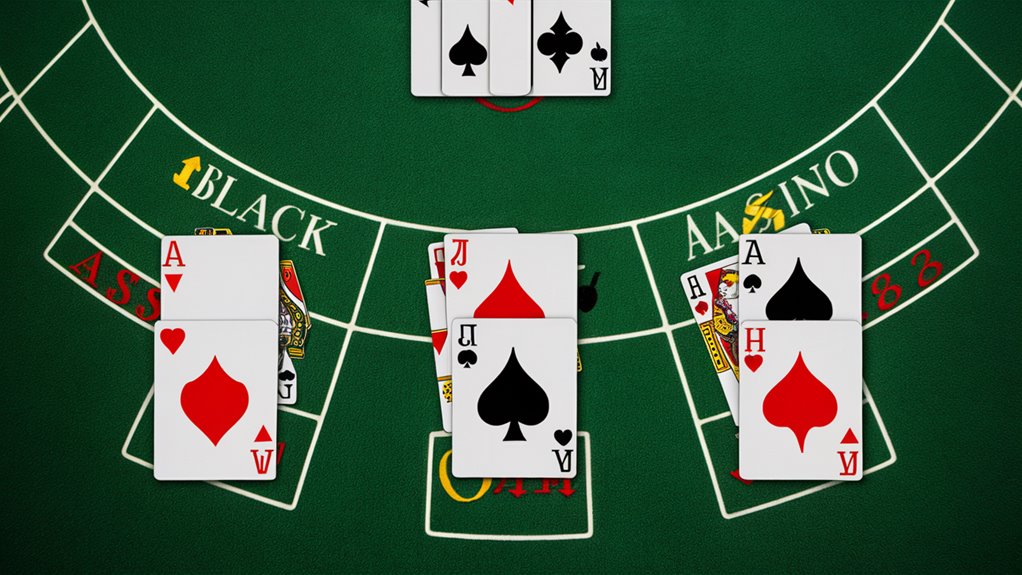
Big Mistakes That Cost You
Not following basic steps is the worst error in blackjack, especially when people don’t play by the math.
A classic mistake is hitting with 16 against a 7 or higher from the dealer – not following the best moves means you win less.
Bad Bets to Avoid
Insurance bets against a dealer’s ace often don’t help you if you don’t count cards. It seems safe but actually drops your chances over time.
You should also avoid playing several hands at once before you really know the basic moves. This can make you lose more and mix up your game.
Watching Your Money
Chasing losses by betting more can empty your bank fast.
Pick the right table: have a bankroll with at least 50x the smallest bet to stay safe from ups and downs.
The most important part: know the basic moves before you play for real.
Remember These Points:
- Stick to the basic plan
- Skip insurance without counting skills
- Watch your betting money
- Pick a good table
- Learn well before playing more hands
Know These Basic Moves
Know All About Basic Blackjack Strategy
Main Moves to Learn
Basic blackjack plan is all about math to make the best moves.
This tested way shows when to hit, stand, double, or split based on your cards and the dealer’s.
Rules for Smart Play
Hard totals need good thinking against the dealer’s spot.
With a hard 16 and the dealer showing 7 or more, hitting is better than the risk of busting, as standing is even worse.
How to Split Pairs
Splitting smartly helps your game long-term:
- Always split Aces and 8s
- Never split 5s or 10s
- Look at the dealer’s cards before splitting other pairs
Soft Hand Moves
Soft hands with an Ace are chances to do well:
- Double on Ace-6 if the dealer shows 3-6
- Hit soft totals vs. dealer’s 7 or more
- Use the Ace well
Good Times to Double
Best times to double:
- Double on 11 unless the dealer has an Ace
- Double on 10 vs. the dealer’s 2-9
- Think hard about the odds before doubling
Learn and Practice
Learn these plans using easy-to-see charts.
Focus on one part at a time until you know it without thinking.
Computer tests of lots of hands show these math tricks work well.
Keeping Your Money Safe
Smart Money Tips for Playing Games
Setting Up Your Money
Handling your money right is key for good game strategy.
Start with a set money limit and break it into small bets.
Turn a $1,000 pot into 100 small bets of $10 for better control and to keep playing longer.
Betting the Smart Way
The best bet plan keeps your bets the same size, not changing as you win or lose.
Go for a safe bet range of 1-2% of all your money per hand. With a $1,000 pot, bet between $10-$20 each time to keep your money longer.
Setting Wins and Losses
Goals for Winning
Put a win goal of 20% of your starting money
Limits for Losing
Set a loss limit of 50% of your initial funds
Putting It to Work
For a $1,000 start:
- Stop if you win $200
- Stop if you lose $500
- Take breaks each hour to see how you’re doing
- Stay calm
Planned money handling helps you play longer and keeps you safe from big losses, boosting your chances to win.
These proven tips build a strong plan for lasting wins at the tables.
Pro Tips for Top-Level Play
Pro-Level Blackjack Strategy Guide
Top-Notch Tips to Know
Card counting basics help you play like a pro.
The Hi-Lo count system values cards: +1 for 2-6, -1 for 10s and faces, and 0 for 7-9. This way, you can keep track of what’s been played.
Picking Your Spot at the Table
Choosing where to sit can really change how well you do.
The last spot lets you see more cards that are out, while the first spot lets you set the pace.
Less players means more hands each hour and better focus. Winning at Online Roulette
Pro Betting Moves
Smart betting means raising slowly on good streaks and cutting back when losing. This helps you stay under the radar while winning more.
Watching the dealer can give you clues from their little slips during the game.
Tracking Shuffle Patterns
Watching shuffles gives you a big edge in games with real shuffling.
This advanced watching lets you guess how cards are spread out.
Getting these high-level skills takes practice and sharp watching, raising your game to a new level.


