
Key Poker Plan Guide: Important Steps for Winning

Learning Hand Ranks
Good poker play starts with knowing poker hand ranks. To know the order from royal flush to high card is key for any big player. This key fact drives every move at the game and lets you learn more complex ways. 이 자료 참고하기
Power of Place and How Tables Work
Being smart about where you sit is a big plus in poker. Being last lets you know more about what others do, which helps in making choices. Being first means you need to be more careful and play fewer hands, while being in the dealer’s spot gives you the best chance to push others.
The Math Side: Knowing Pot Odds
Working out pot odds turns wild guesses into smart moves. Get good at the math behind betting half the pot and betting all of it to win more often. This skill is really useful in games for money and big events where small math mistakes can mean losing a lot.
Seeing What Others Do and Spotting Clues
The better you get at seeing what other players are up to, involving body signs and how they bet, the better you’ll do. Look for signs in how fast they bet and how much they put in. Top players use what they see and where they sit to guess and beat the other’s plan.
How to Manage Your Money Like a Pro
Tight control of your money is the heart of doing well in professional poker. Use the 5% rule for picking games, never risking more than 5% of your total money in one go. This careful way makes sure you stay in the game long and keeps you safe from ups and downs while you build your poker life.
Getting Hand Ranks Down
Getting the Hand Ranks in Poker Fully Understood
Getting the Hierarchy of Poker Hands
Good poker plans start by mastering poker hand ranks. These ranks stay the same through most poker games and form the core of playing right.
Top Hand Ranks from Best to Worst
Royal Flush
The best poker hand pulls together A, K, Q, J, 10 all in the same suit.
Straight Flush
Five cards in a row, all in the same suit, just below the royal flush.
Four of a Kind
This hand has all four cards of one rank, in different suits.
Full House
A strong mix of three of a kind and a pair.
Flush
Five cards of the same suit, not in order.
Straight
A run of five cards, suit doesn’t matter.
Three of a Kind
Three cards of the same rank.
Two Pair
Two different pairs.
One Pair
Two cards of the same rank.
High Card
The top card if no other set forms.
Playing Right With Good Knowing of Hands
Quick knowing of poker hand ranks helps in making quick and right choices in the game.
Key Moves Based on Position
How to Play Based on Where You Sit in Poker
The Power of Your Seat at the Poker Table
Where you sit is one of the big game moves in poker.
Playing from the Start
Being in the first few seats means you need a tight play style.
The Middle Seats
The middle spots let you play a bit more freely.
The Good Edge of Sitting Late
The last few spots (near the dealer) give the best chances for more moves.
Math Behind the Pot
How to Work Out Pot Odds in Poker: Full Info
Basic Learning of Pot Odds
Understanding pot odds is key for smart betting moves.
Step-by-Step Way to Figure It Out
With a $20 bet into a $60 pot, the full pot goes to $80.
Quick Math Helps
- Half the pot bet: 3:1 odds (need 33% win chance)
- Quarter of the pot bet: 5:1 odds (need 20% win chance)
- All in on the pot: 2:1 odds (need 33% win chance)
More Deep Thinking: Adding What Could Come
Thinking ahead builds on simple pot odds by guessing more money you might win later.
Using Pot Odds Right
Bigger bets against the pot cut the odds a lot.
Seeing What Others Do
How to Read Others: More Deep Poker Tips
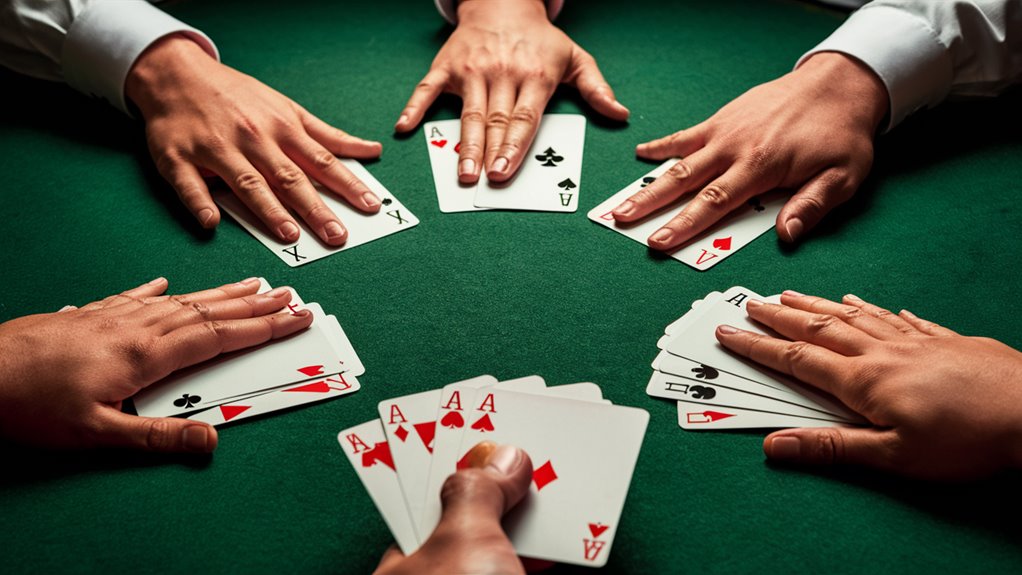
Seeing Signs and How They Bet
Reading other players in poker needs you to get good at watching for body signs and how they bet.
Main Body Signs and Timing Clues
- How they sit and move
- What they do with their hands and chips
- How fast or slow they bet and change rhythms
Seeing Clues and Past Plays
Looking at betting past over many hands tells a lot.
Keeping Your Edges
Hiding your patterns is a must to keep ahead.
Looking After Your Money
Must-Know Money Tips for Poker
Basic Money Tips
Smart money care is the base of doing well in poker long term.
Needs for Big Events
Event poker needs more money saved because it goes up and down a lot.
Ways to Manage Risk
Set firm limits of loss of 2-3 buys per game to stop big drops.
Getting Better at Protecting Your Stake
- Write down all game details
- Lower your risk level during hard times
- Keep a clear line between game money and life money
- Set strict game stop points
- Track win rates and ups and downs
- Change levels based on how your money changes
Usual Betting Moves
Knowing Usual Betting Moves in Poker
Easy Betting Pattern Spotting
Betting patterns show a lot about how strong others think their hands are.
Main Moves to Watch
The Follow-Through Bet
Continuation bets are when players keep up their bet after leading before the flop.
How Much Tells
- Small raises usually are mid-strength hands testing the waters
- Big jumps hint at top hands
- Smaller bets might mean they’re trying for a big hand
How Fast Tells
- Fast choices link with very strong or very weak hands
- Long waits followed by big bets often signal not having much
- Shifting speeds can point to players trying to hide their true hand
Deep Look at Patterns
Keep a close eye on how often others bet and how they play from different spots.
Tourney Vs Daily Games
Tourneys Versus Daily Games: Key Game Ways
Main Game Style Differences
Tourney poker and daily games need different plans to do well.
Tourney’s Game Style
Blinds going up marks tourney play, putting unique spots of pressure at different points.
Daily Game Style
Daily game poker lets you play more loose thanks to the stable game structure.
Choosing Starting Hands
In Tourneys
- Play tight early Energizing Bubbling Reels for Instant Bonus Impact
- Open up as you go
- Think on chips versus blinds
- Game money effects push your choices
In Daily Games
- Keep to usual hands you begin with
- Change based on who you’re up against
- Think on deep stacks
- Based on value, make your pick


